
 REGISTER HERE!
FREE: 5.5 IDFPR CEU’s for LSW/LCSW, LPC/LCPC, Psychologists, and IAODAPCA (Pending)
* 1 hour Lunch on your own
SUMMARY
This training equips mental health professionals with an evolutionary, trauma-informed lens for understanding clients. Its core idea is evolutionary mismatch: brains and bodies shaped over 6 million years struggle in modern environments, producing anxiety, depression, ADHD, addiction, and a loneliness epidemic. It traces brain architecture, the HPA axis and chronic stress, and why humans uniquely suffer from rumination. The framework reframes symptoms as ancestral adaptations—reducing shame—and integrates with CBT, DBT, ACT, EMDR, as well as somatic approaches. It teaches six interventions: physiological sigh, psychoeducation, completing the stress cycle, window-of-tolerance work, nature prescription, and social co-regulation, closing with a practical 30-day integration plan.
OBJECTIVES
- Explain how evolutionary biology shapes common mental health presentations
- Recognize ‘evolutionary mismatches’ in your own life and clinical practice
- Describe the stress response (HPA axis, cortisol) in accessible, non-jargon language
- Apply six interventions that align with evolved neurobiology
- Use psychoeducation about evolution to reduce client shame and increase self-compassion
- Practice three experiential exercises that generate embodied insight
- Integrate evolutionary awareness into your existing trauma-informed clinical framework
- Leave with a concrete 30-day integration plan for your own practice
PRESENTER
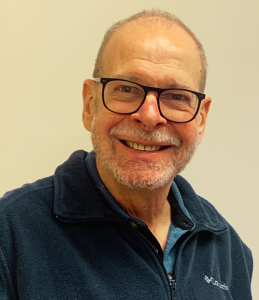 Gary Rukin, LPC, MA, MS, has worked in Community Mental Health for the past thirteen years. He serves as the Trauma-Informed Coordinator for the McHenry County Mental Health Board, and has presented trainings on Dialectical Behavior Therapy, Understanding Psychosis, Understanding and Treating Emotional Trauma, and Acceptance and Commitment Therapy for Thresholds, The Suicide Prevention and Mental Health Recovery Conference, Northwestern University Hospital, and the Illinois Department of Human Services.